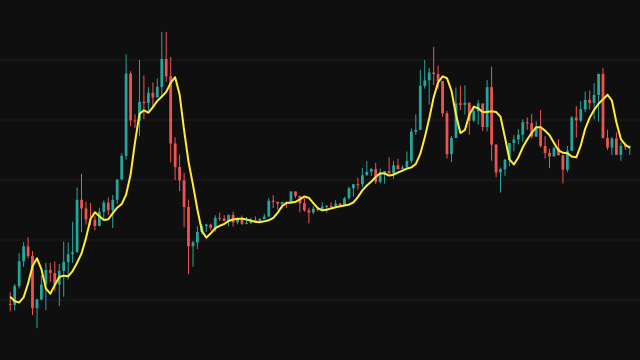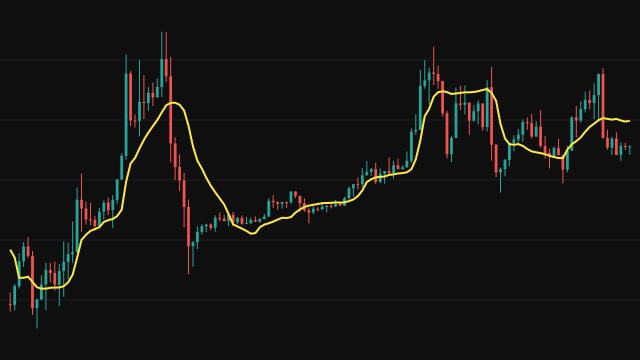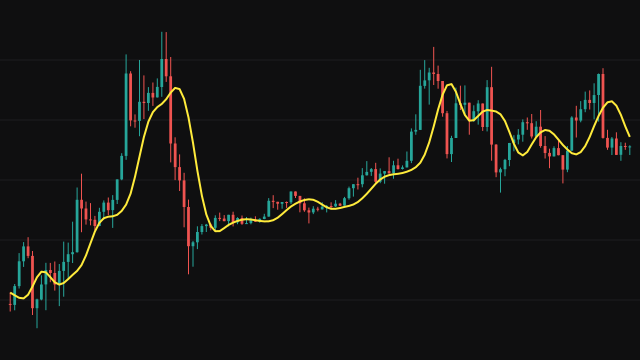
The Elliptic 2nd Order Filter is a biquad lowpass: each value combines the current and two previous prices with the filter's own two previous values. Its design allows 1 dB of ripple in the passband and requires 40 dB of rejection in the stopband. In exchange for that small ripple, its two zeros put a notch just above the cutoff frequency, so the line drops fast noise more steeply than a Butterworth filter of the same order.
The cutoff is set by Length. The study pre-warps the cutoff with tan(pi / Length), scales a fixed normalised prototype to it and converts the result into the five coefficients of the difference equation. The input coefficients are normalised so a flat price passes through unchanged.
The first two bars plot the price itself and seed the recursion.
How to read Elliptic 2nd Order Filter (ELLIPTIC)
Read the line as a smoothed price. Its slope shows the direction of the trend at the scale of Length, and a turn in the line marks a turn in the swing. The notch removes most of the short wiggles just past the cutoff, so the line shows fewer small false turns than a simple average of similar lag.
The price of the sharp cutoff is a little passband ripple: after a sudden move the line can wobble slightly or overshoot before settling. Like any lowpass filter it lags; a larger Length smooths more and turns later.
Settings
- Length
- The cutoff period in bars. Swings shorter than this are removed; larger values smooth more and lag more.
- Source
- The price series the filter smooths, the close by default.
Frequently asked questions
What do Rp=1 and Rs=40 in the line title mean?
The design allows 1 dB of ripple in the passband and gives at least 40 dB of rejection in the stopband.
Why choose an elliptic filter over a Butterworth?
For the same order it cuts off more steeply, thanks to the notch past the cutoff. The trade-off is slight ripple and overshoot.
Why does the line equal price on the first two bars?
The recursion needs two previous outputs. The first two bars use the price as those seeds.