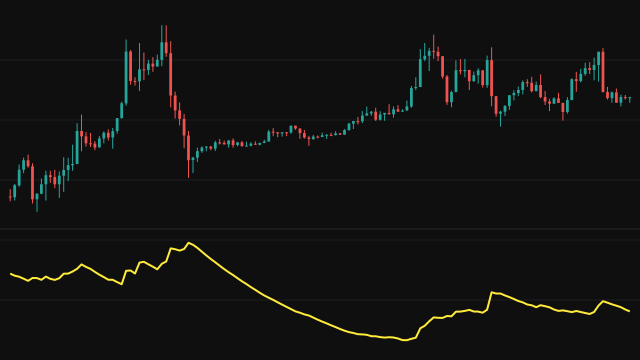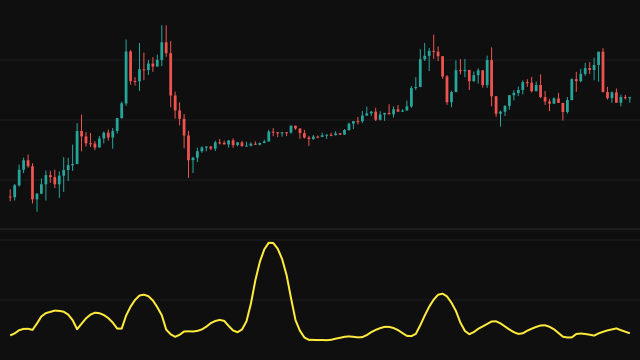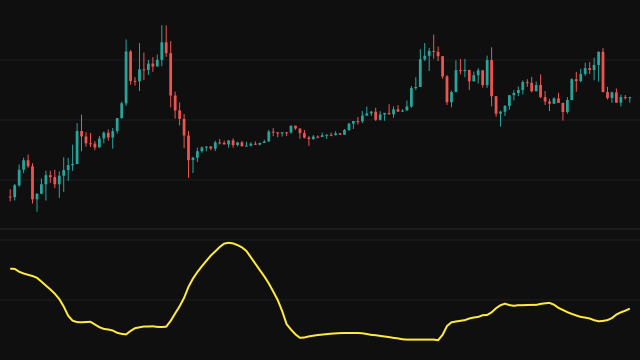
The volatility ratio compares the size of the current bar with the size of recent bars. The current bar is measured by its true range: the greatest of high minus low and the two distances from the high and the low to the previous close. The first bar uses high minus low.
The recent norm is a Wilder average of true range with weight 1 divided by the ATR period, set to the first bar's true range on the first bar. While a compensating weight, which starts at 1 and shrinks by the factor one minus 1 divided by the ATR period on every bar, is above a tiny threshold, the average is divided by one minus that weight. The ratio is the current true range divided by that average.
Because the average already starts from a real true range and is still divided by a small number at first, the early average is too large and the early ratio too small: on the first bar the ratio is exactly 1 divided by the ATR period. The effect fades as the compensating weight shrinks.
How to read Volatility Ratio (VR)
A reading of 1 means the bar is as wide as the recent average. Readings well above 1 mark expansion bars, often a breakout or a news move, and readings below 1 mark quiet bars inside a contraction. A cluster of high readings means volatility is expanding.
The first bars read low because of the start-up correction, so read the line once a few multiples of the ATR period have passed. The ratio carries no direction: a wide down bar and a wide up bar read the same.
Settings
- ATR Period
- How many bars the average true range in the denominator is smoothed over. A longer period makes the norm steadier.
Frequently asked questions
What does a value of 2 mean?
The current bar's true range is twice the recent average true range: an unusually wide bar.
Does it say which way price moved?
No. True range is a size, so a strong up bar and a strong down bar give the same reading.
Why are the early readings so low?
The average starts from the first true range and is then divided by a number that is small at first, so it begins too large. The first reading is 1 divided by the ATR period, and the ratio climbs toward normal as that divisor approaches 1.