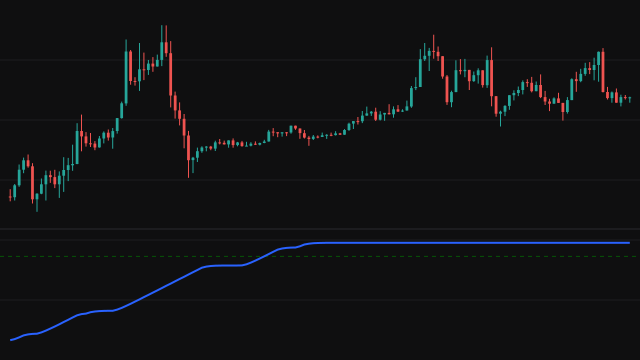
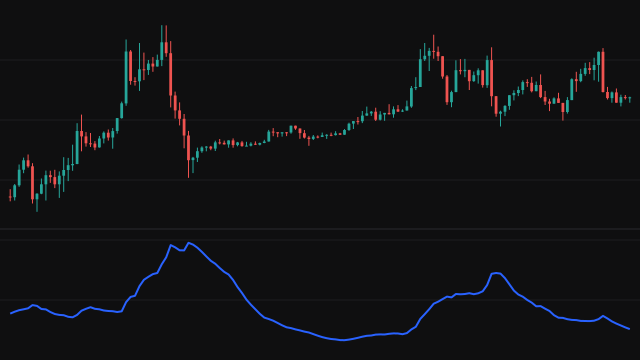
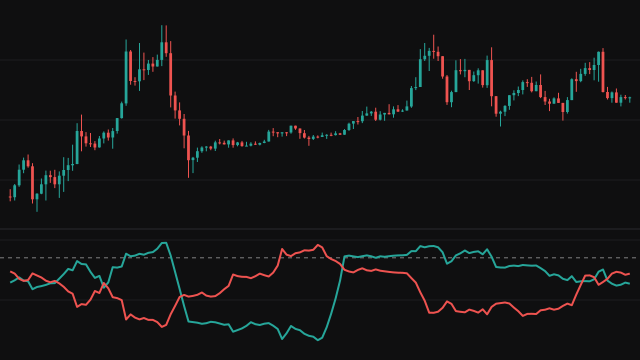
The Chande Trend Score, designed by Tushar Chande, grades a trend by comparing the current close with the closes of ten earlier bars, from 11 bars back through 20 bars back. Each comparison scores plus 1 when the current close is above the older close and minus 1 when it is not, so a tie counts as minus 1. The trend score is the sum of the ten scores.
The result is a whole number between minus 10 and plus 10, drawn as a histogram in its own pane: green at zero and above, red below, with a dashed zero line. First Lookback moves the nearest of the compared bars and Number of Lookbacks sets how many consecutive bars are compared, so the range of the score is always plus or minus that number. The first value appears once the oldest compared bar exists.
How to read Chande Trend Score
Plus 10 means the close is above every close from 11 to 20 bars ago, a steady up trend; minus 10 means it is below all of them, a steady down trend. Readings near zero mean the close sits in the middle of where it traded 11 to 20 bars ago, which is what a range looks like.
Because the score only counts comparisons, it ignores how far price has moved: a slow grind and a sharp rally can both score plus 10. Skipping the most recent ten bars makes it slow to react, so it is a filter for the direction of the larger trend rather than a timing signal.
Settings
- Source
- The price series that is compared with its own past values. Close is the published choice.
- First Lookback
- The nearest past bar in the comparison. 11 is the published value; a smaller value makes the score react sooner.
- Number of Lookbacks
- How many consecutive past bars are compared, starting at the first lookback. 10 is the published value, giving a score from minus 10 to plus 10.
Frequently asked questions
Why does it skip the last ten bars?
Comparing with closes 11 to 20 bars back measures where price stands against the recent past as a whole, so a few days of noise do not flip the score. Lower the first lookback for a faster reading.
How is a tie scored?
As minus 1. A point is added only when the current close is strictly above the older close.
Why is the score always an even number with the defaults?
Each of the ten comparisons adds plus 1 or minus 1, so the total of an even number of them is always even. With an odd number of lookbacks it is always odd.