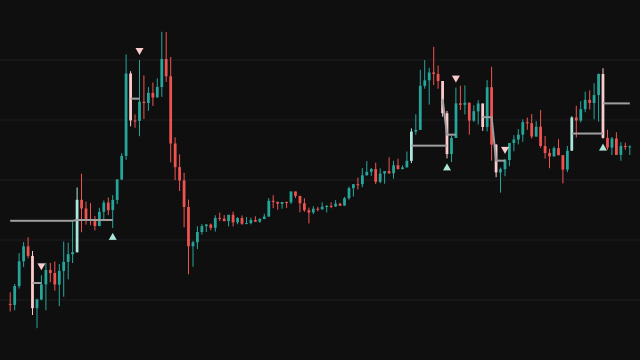
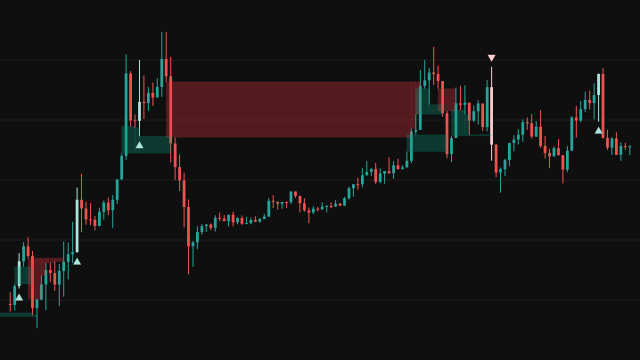
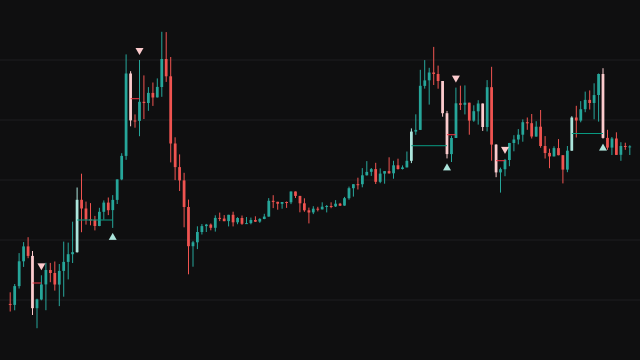
Note. The zig zag line is drawn 60 bars behind the newest bar because a plot cannot redraw bars it has already drawn, so the newest 60 bars show no zig zag line and, with a long Zig Zag Length where a swing takes more than 60 bars to settle, parts of the older line can differ from the final swings (signals, level lines and candle colours are unaffected); the table is drawn at the chart's own text size and in the nearest corner, because a table here has no size setting and pins only to a corner.
The study builds a zig zag from running highs and lows. A bar is a swing high when its high is the highest of the last Zig Zag Length bars, and a swing low when its low is the lowest. When the direction turns a new swing point is added; while the swing in progress keeps extending, its newest point moves with it. The seven newest swing points are kept, numbered from the newest (zz1) to the oldest (zz7).
A sweep needs two things. First, the six swings behind the newest one must sit in a fixed shape: for a short, a sequence of lower highs and lows that leaves the oldest swing above all the others, and the mirror image for a long. Second, the newest swing must cross the chosen earlier swing level: the 1st, 2nd or 3rd swing of the same side back, picked by Screening Method. A short fires when the newest swing crosses above that level, a long when it crosses below it. With the first method the long side is tested against the same shape as the short side, exactly as the calculation defines it.
On a signal the candle is tinted, a small triangle is drawn above or below it, and a line is drawn from the swept swing across to the signal bar at the swept price. A small table shows the day's running percentage change, the change in the day's volume against the previous day, the day's volume and the previous day's volume in lakhs, with days counted in the chart's own timezone.
How to read Liquidity Sweep Pattern Scanner
A short signal marks a push above an earlier swing high that came after a falling swing structure: price has run the stops resting above that high. A long signal is the same idea below an earlier swing low. The horizontal line shows which level was taken and where it came from, so you can judge whether price is accepted beyond it or snaps back.
The swings are built from running highs and lows, so the newest swing point can still move while the swing in progress extends, and a signal depends on the shape at the time it fired. The blue zig zag line is drawn 60 bars behind the newest bar, once its legs have usually settled, so the most recent swings are read from the markers and level lines rather than from the line. Treat a signal as a level to watch rather than an order to trade.
Settings
- Screening Method
- Which earlier swing the newest swing has to sweep: the 1st, 2nd or 3rd swing of the same side back. A deeper swing gives fewer, larger sweeps.
- Long Signals
- Show the long sweeps, where the newest swing runs below an earlier swing low.
- Short Signals
- Show the short sweeps, where the newest swing runs above an earlier swing high.
- Display Zig Zag
- Draw the zig zag line joining the swing points. The signals are found the same way whether it is shown or not.
- Zig Zag Length
- How many bars a high or low must lead to count as a swing point. A longer length gives fewer, larger swings.
- Source
- Build the swings from the wicks (High/Low) or from the candle bodies (Open/Close).
- Swept Level Line Style
- Style of the line drawn from the swept swing across to the signal bar: solid, dashed or dotted.
- Display Table
- Show the table of the day's percentage change, volume change, volume and previous day volume.
- Position
- Where the table sits. Tables pin to a corner, so a centre column is drawn on the right and a middle row at the bottom.
- Size
- Kept for the text size of the table; the table is drawn at the chart's own text size in this version.
Frequently asked questions
Why does the zig zag line stop short of the newest bars?
A leg of the zig zag is only known once the swing after it has formed, so the line is drawn 60 bars behind the newest bar, where its legs have usually settled. At the default length that holds; with a long Zig Zag Length one swing can take more than 60 bars to settle, and the line on those bars can then differ from the final swings. The swing points, signals and level lines are all computed on the newest bar and are not affected.
What is the shape the six earlier swings must form?
For a short, the swings behind the newest one step down from an oldest high that stands above all of them, with each comparison between them fixed. For a long it is the mirror image. Only when that shape holds does a cross of the chosen level count as a sweep.
What does the line on a signal show?
It starts at the swept swing point, at that swing's price, and runs across to the signal bar, so it shows which level the newest swing took and how far back it was set.
Why does the first method behave differently on the long side?
With Prev 1 Swing Sweep the long condition is tested against the same falling shape as the short condition rather than its mirror, so long signals with that method are rare. The other two methods test longs against the mirrored shape.