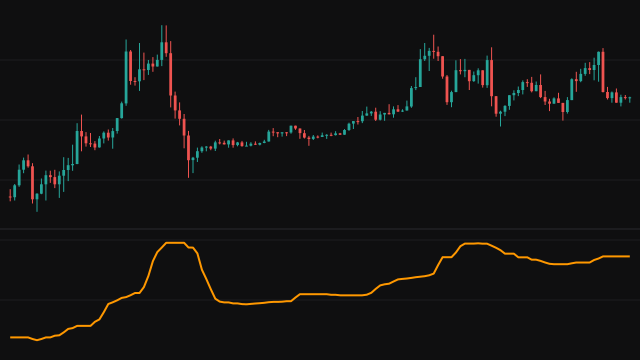
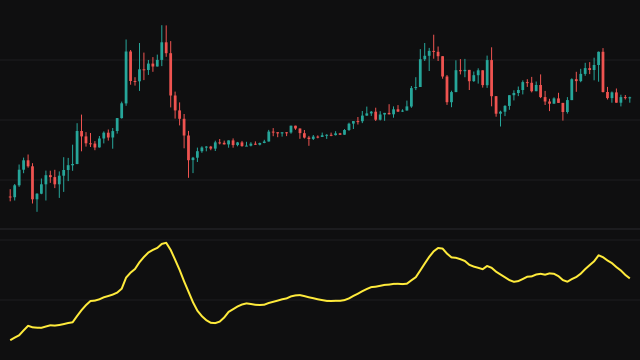
Mean Deviation measures how far the values in the lookback window sit from their own average. The study takes the mean of the last period values, then averages the absolute distance of each of those values from that mean. The answer is in price units, like the source.
The window grows from the first bar: until period bars have passed, the mean and the deviation are taken over every bar so far, so the line has a reading from bar 0. A missing source value is counted as zero.
Unlike a standard deviation, which squares each distance before averaging, mean deviation adds the distances as they are. A single large move therefore raises it less, and it reads closer to the typical distance from the mean.
How to read Mean Deviation (MEANDEV)
A rising line means the values in the window are spreading out from their average, which usually comes with a larger move or a breakout. A falling line means the window is tightening around its average, as in a quiet range. Compare the reading with its own history on the same chart rather than with a fixed number, because it is in price units.
It says nothing about direction: a sharp rise and a sharp fall both push it up. The first period bars use a shorter window and read less reliably.
Settings
- Period
- How many bars the window covers. A longer window gives a smoother measure of spread that reacts more slowly.
- Source
- The series whose spread is measured, such as the close or the bar midpoint.
Frequently asked questions
How is it different from standard deviation?
Standard deviation squares each distance before averaging and takes the square root at the end, so large distances count for more. Mean deviation averages the plain distances, so it is less sensitive to a single outlier and is usually a little smaller.
Why does it have a value on the first bars?
The window grows from the first bar, so early readings are taken over however many bars exist. A window of one bar has no spread and reads zero.
Is a high value bullish or bearish?
Neither. It measures how scattered the window is, not which way price moved.