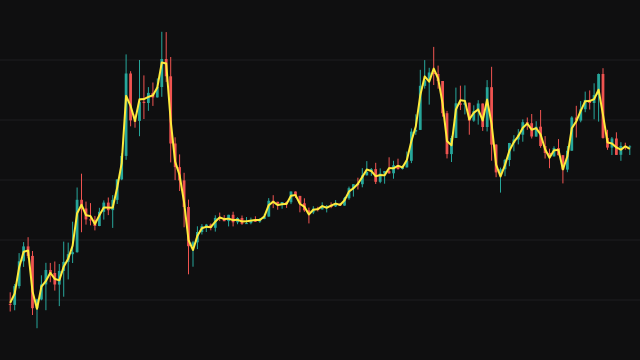
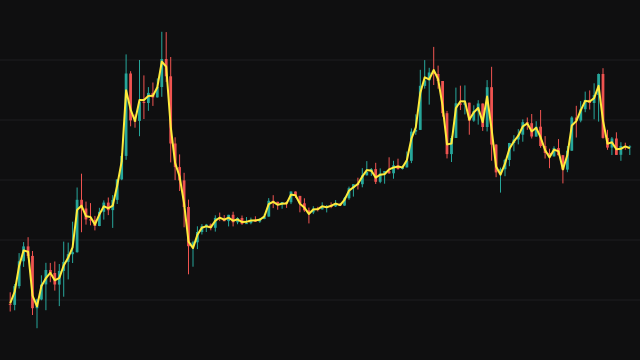
Midprice (HL2) reduces each bar to one number: the point halfway between its high and its low. It is computed as (high + low) * 0.5 on every bar, with no lookback and no smoothing, so each value depends only on the bar it is drawn on.
The open and the close play no part in it. Two bars with the same range but opposite bodies, one closing at its high and one at its low, have exactly the same midprice. That makes the line a neutral reference for where a bar traded rather than where it finished, and it is a common input to other studies that want a price free of the closing tick.
How to read Midprice (HL2)
Read the line as the centre of each bar's range. A close above the line means the bar settled in the upper half of what it traded, and a close below means it settled in the lower half; a run of closes on one side shows which half buyers or sellers kept winning.
Because it has no lookback, the line is as noisy as the bars themselves and does not mark a trend on its own. It is most useful as a reference price, or as the source for an average or an oscillator that needs a value less tied to the close.
Frequently asked questions
How is this different from the close?
The close is where the bar finished. The midprice is the centre of the bar's whole range and ignores where it finished, so it moves less on a bar that closes at an extreme.
Does it repaint?
No. Each value uses only the high and low of its own bar, so once a bar is complete its midprice never changes. On the newest bar it moves as the high and low extend.
Why use it as a source for another indicator?
An average or oscillator fed with the midprice reacts to the range a bar traded rather than to its last tick, which can make it steadier on bars with long wicks.