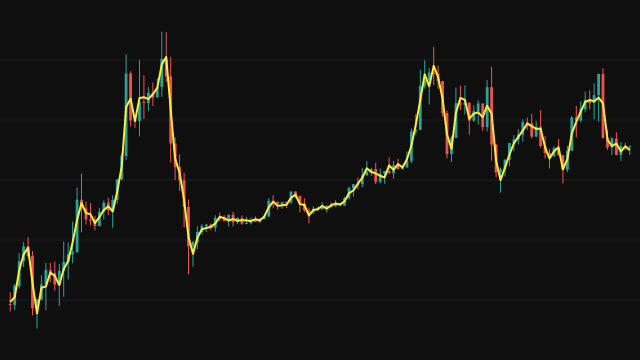
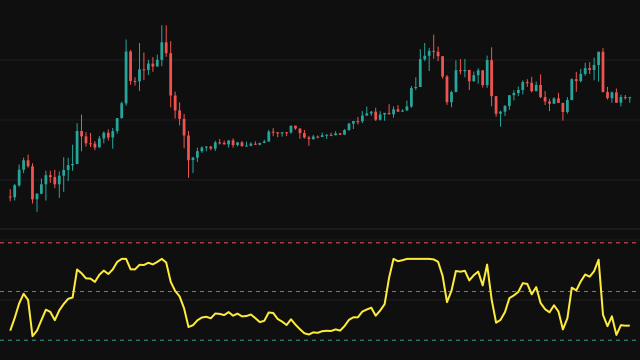
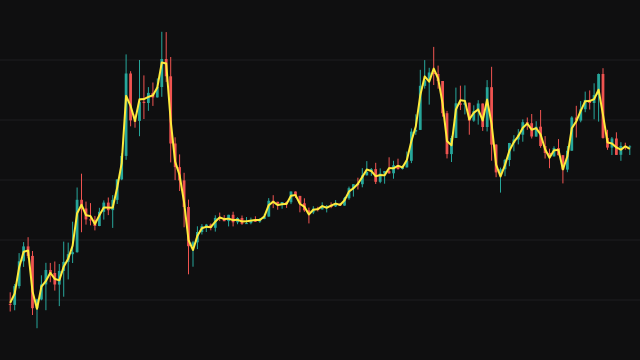
Highest Value draws the running maximum of a price series over a fixed lookback. On each bar it looks at the last period values of the source and plots the largest of them, so the line steps up the moment a new high enters the window and steps down only when the old high drops out of the back of it.
While fewer than period bars exist, the line is the highest value seen since the first bar, so it starts on the very first bar instead of waiting out a warmup. A missing source value is read as zero and still takes its place in the window. Once the window is full, the line is the plain rolling highest of the last period bars, the current bar included.
How to read Highest Value (HIGHEST)
Read the line as the ceiling of recent trading. A flat stretch means no new high has been made inside the window, and the length of the flat stretch shows how long the last high has held. A step up means price has just set a new high for the window. When the line steps down, the old high has aged out, which often follows a quiet or falling market.
The window includes the current bar, so the source can never be above the line. To test for a breakout, compare the source with the line one bar earlier. A short period hugs price closely, while a long period marks the major swing highs.
Settings
- Period
- How many bars the window covers. A longer window holds old highs for longer and changes less often.
- Source
- The series whose highest value is tracked, for example the close or the high of each bar.
Frequently asked questions
Why does the line start on the first bar?
Until the window holds period bars, the study reports the highest value seen so far. After that it reports the highest value of the last period bars.
Can the source ever be above the line?
No. The window includes the current bar, so the line is always at or above the source. Compare the source with the previous bar's value of the line to spot a new high.
Should I use the high or the close as the source?
Use the high to track the true price ceiling, including wicks. Use the close when only settled prices matter, which gives a lower and steadier line.