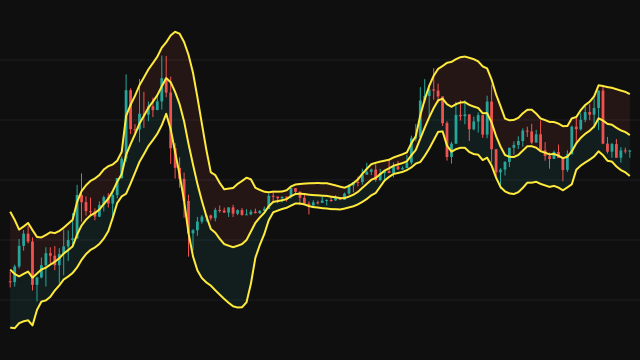
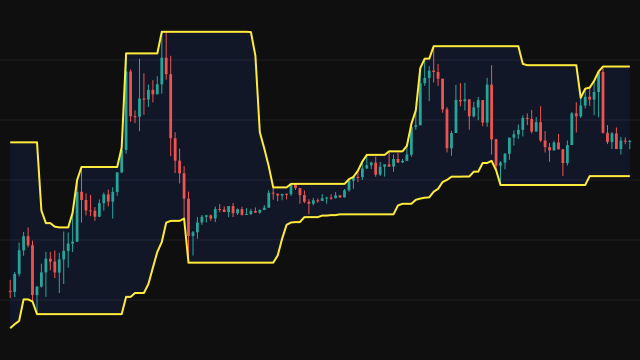
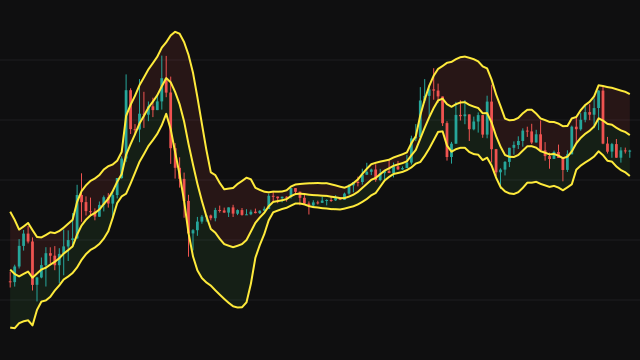
Price Channel draws three lines from the bar highs and lows of the last Length bars. The upper channel is the highest high in that window, the lower channel is the lowest low, and the middle channel is the point halfway between them. The area between the outer lines is shaded.
The channel answers from the first bar. Until Length bars exist it uses every bar so far, so the early lines are the running high and low of the chart. After that each outer line is the extreme of a fixed window and steps as old extremes drop out. A missing high or low is read as zero.
How to read Price Channel (PCHANNEL)
A close above the upper channel means price has made a new Length bar high, and a close below the lower channel a new Length bar low; breakout systems act on exactly those events. The middle line is the centre of the recent range, and price holding above it suggests buyers control the range while price below it suggests sellers do.
The edges never anticipate a move. They only follow price, holding flat in a range and stepping when a new extreme is set or an old one leaves the window.
Settings
- Length
- How many bars the window covers. A longer length gives a wider channel and fewer breakouts.
Frequently asked questions
What does the middle line add?
It is the midpoint of the highest high and the lowest low, the centre of the recent range. It is often used as a trailing level or a bias line rather than as a signal on its own.
Why does an edge suddenly jump?
An edge is the extreme of a fixed window. When the bar that set it falls out of the window, the edge moves to the next most extreme value, which can be some distance away.
How does it start before Length bars exist?
It uses every bar it has, so the early values are the running high and low of the chart so far.