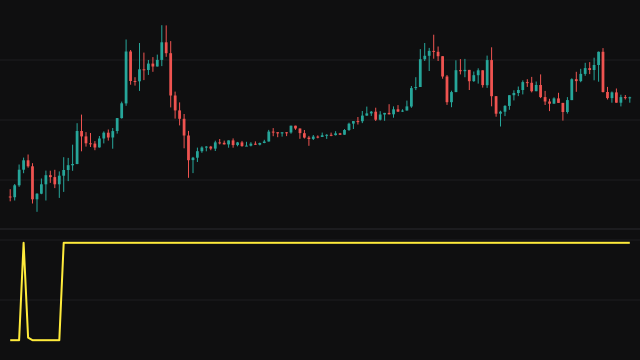
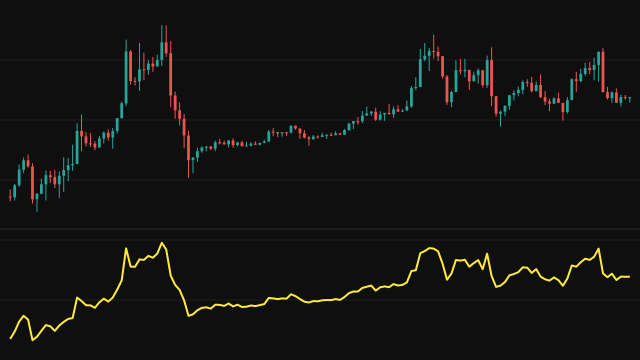
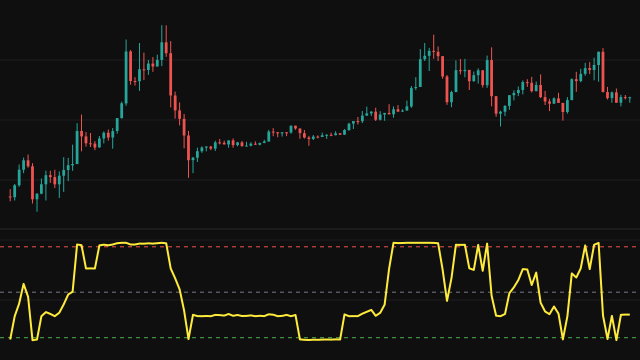
Standardization rescales a series into z-scores. For each bar it takes the mean and the sample standard deviation of the source over the lookback window, then reports how far the current value is from that mean, measured in standard deviations. A reading of 2 means the value is two standard deviations above its recent average; -1 means one below.
The study keeps running sums of the values and of their squares over the window and derives the mean and variance from them. Until the window fills it uses the bars seen so far, so it starts on the second bar. A variance below 1e-10 counts as zero, and a window with no spread at all reads 0 when the value sits on its mean.
How to read Standardization (Z-score)
Values near zero mean price is close to its recent average. Readings beyond plus or minus 2 are unusual for the window and often mark stretched moves, while a series that keeps returning to zero is mean reverting over that horizon. Because every series becomes unitless, you can compare the z-score of two instruments or two indicators directly.
The scale assumes a roughly bell-shaped spread. Trending markets can hold high or low z-scores for a long time, so an extreme reading describes how unusual the move is, not that it must reverse.
Settings
- Source
- The price series that is standardized, the close by default.
- Lookback Period
- How many bars the mean and standard deviation cover. Longer windows give a steadier baseline that reacts more slowly.
Frequently asked questions
Why does it use the sample standard deviation?
The variance is divided by the count minus one, the sample form, which is slightly larger than the population form on short windows. That is why the window must hold at least two values.
What does a reading of 3 mean?
The current value is three standard deviations above the window mean. On a normal spread that happens rarely, so it marks an unusually strong move relative to recent behaviour.
Why does the line start on the second bar?
A single value has no spread. From the second bar the study uses all the bars seen so far, and once the window is full it uses only the last Lookback Period bars.