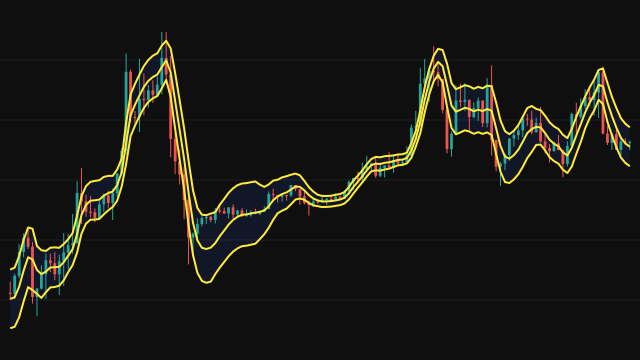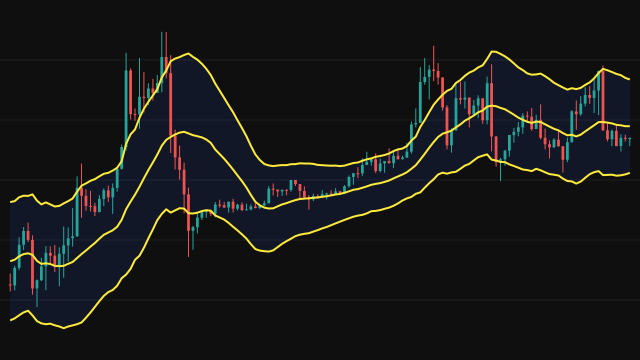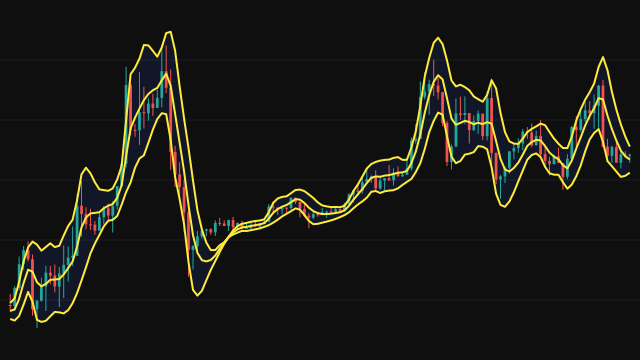
Super Trend Bands starts from the midpoint of each bar, (high + low) / 2, and places a basic upper band above it and a basic lower band below it, each a multiple of the average true range away. True range here is the largest of the bar's high minus low and the distances from the high and the low to the previous source value. It is averaged with a simple mean over the ATR Period, and over however many bars exist until the period is filled, so the bands start on the first bar.
The drawn bands ratchet. The upper band only moves down: it takes the new basic upper band when that is lower, and otherwise holds its previous value, unless the previous source value closed above it, in which case it resets to the basic band. The lower band is the mirror image and only moves up until the previous source value closes below it.
How to read Super Trend Bands (STBANDS)
The two bands frame price from above and below and step toward it as a move matures, so they work as trailing levels. While price stays between them the trend is intact; a close through the upper band shows strength strong enough to reset resistance, and a close through the lower band does the same for support. Many traders trail a stop on the band on the far side of their position.
The reset is decided by the previous bar's close, so a band reacts one bar after the break. A larger multiplier keeps the bands farther from price and gives fewer resets.
Settings
- ATR Period
- How many bars the simple average of true range covers. A longer period gives steadier band distances.
- Source
- The series whose previous value decides when a band resets and anchors the true range. The close by default.
- ATR Multiplier
- Distance of each basic band from the bar midpoint as a multiple of the average true range. A larger value widens the bands.
Frequently asked questions
How does this differ from a single supertrend line?
A supertrend line shows only the band on the active side of the trend. This study draws both ratcheting bands all the time, so you see support and resistance together.
Is the average true range a recursively smoothed average here?
No. It is a simple mean of the true range over the ATR Period, and over all bars so far until that many exist.
Why does a band jump away from price?
When the previous source value closes beyond a band, the band resets to the basic band computed from the current bar, which is usually much farther away.