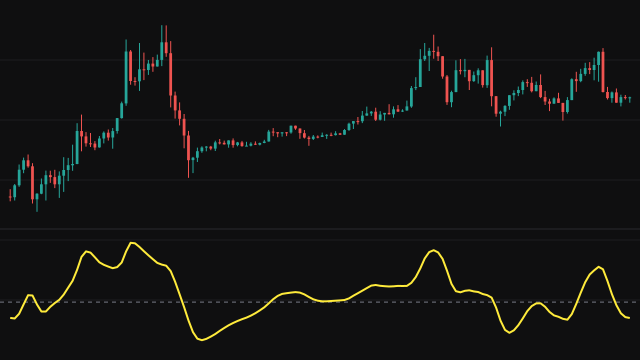
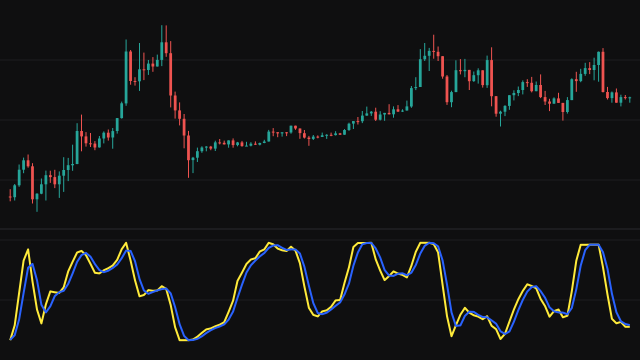
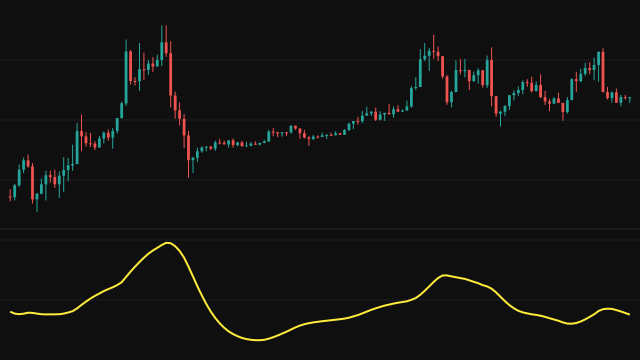
TD Sequential is a counting system in two phases. The setup compares each close with the close comparePeriod bars earlier. A close above it extends a positive count, a close below it extends a negative count, and an equal close resets the count to zero. A count that flips direction starts again from plus or minus 1, and the count is capped at plus or minus 9.
When the setup first reaches 9 or -9, a countdown opens in the same direction. Unlike the setup it does not need consecutive bars: it steps by one only on bars where the close is above the high of two bars earlier (for an up countdown) or below the low of two bars earlier (for a down countdown). It stops at plus or minus 13, and a completed setup in the opposite direction restarts it the other way. The setup is drawn as a histogram and the countdown as a line, with reference levels at 0, plus or minus 9 and plus or minus 13.
How to read TD Sequential (TD_SEQ)
A setup bar reaching +9 means nine closes in a row above the close four bars earlier, a stretched advance; -9 is the same for a decline. Traders read a completed setup as a sign that the move is mature, not as an order to trade against it.
The countdown line then tracks whether the move keeps making progress. A countdown reaching +13 or -13 is the stronger exhaustion reading, and the line holds at that value until a new setup restarts it. Both counts describe how extended a move is; neither says where it will turn, and a strong trend can complete several setups in a row.
Settings
- Compare Period
- How many bars back each close is compared with during the setup. A shorter gap makes setups complete more often; a longer one demands a more sustained move.
Frequently asked questions
What resets the setup count?
A close equal to the close comparePeriod bars earlier resets it to zero, and a close on the other side starts a new count from plus or minus 1 in the opposite direction.
Why does the countdown move more slowly than the setup?
It steps only on bars that close beyond the high or low of two bars earlier, and the bars in between do not have to qualify. A countdown can take many more bars than 13 to complete.
Why does the countdown line stay flat at 13 or -13?
Once it reaches 13 the countdown is complete and stops counting. The line keeps that value until a new setup in either direction starts a fresh countdown from zero.